Ancestral or Self-Acquired? How to Tell the Difference Before You Buy or Sell Land
4 min read
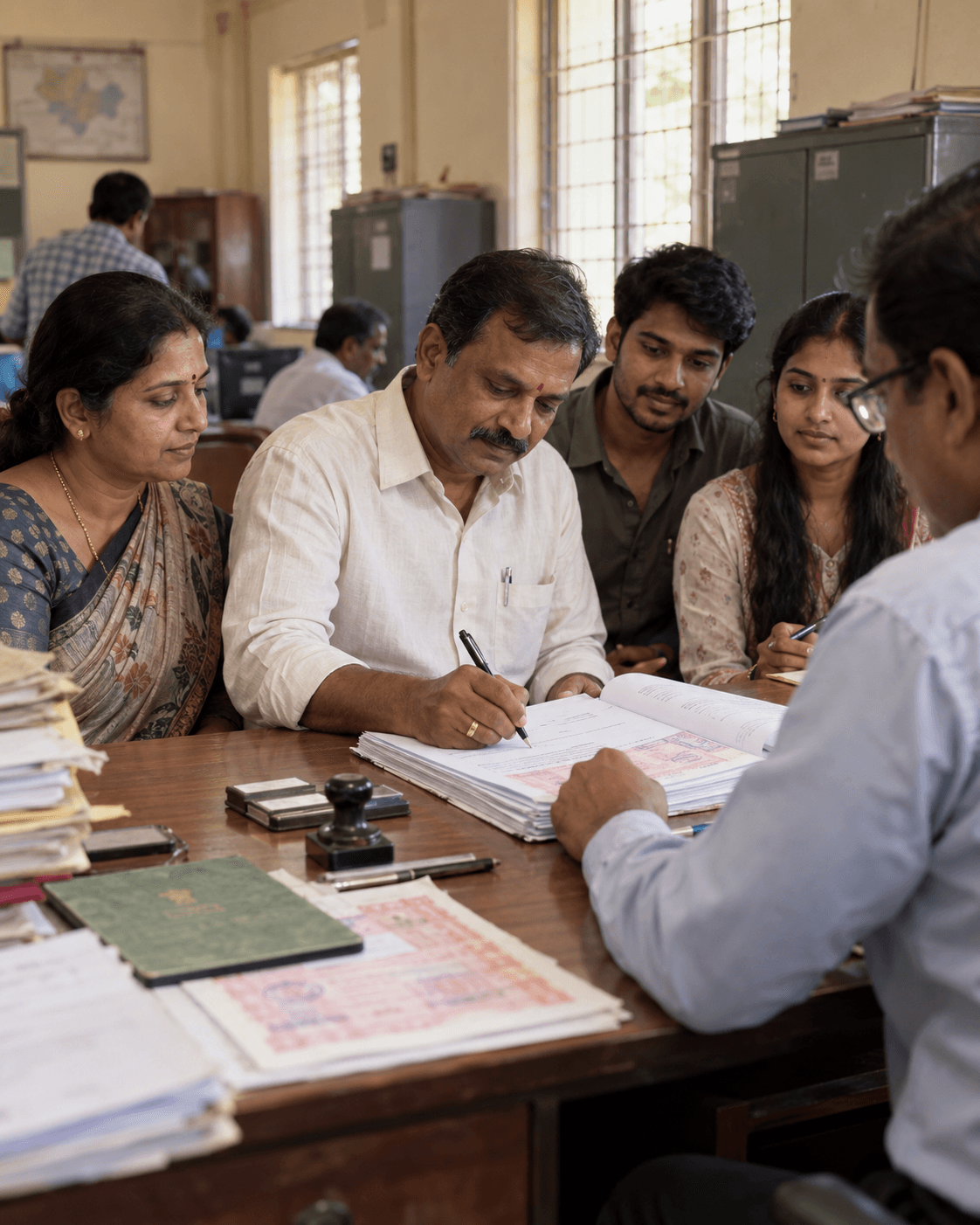
Most sellers see this as an unnecessary hurdle. It isn't. Whether those signatures are legally required depends on one question: is this property ancestral or self-acquired? Get that answer wrong and the sale can be challenged in court years later. Note: The rules below apply to Hindus, which under the Hindu Succession Act includes Sikhs, Jains and Buddhists. Muslim, Christian and Parsi families follow different succession laws.
What Makes a Property Ancestral
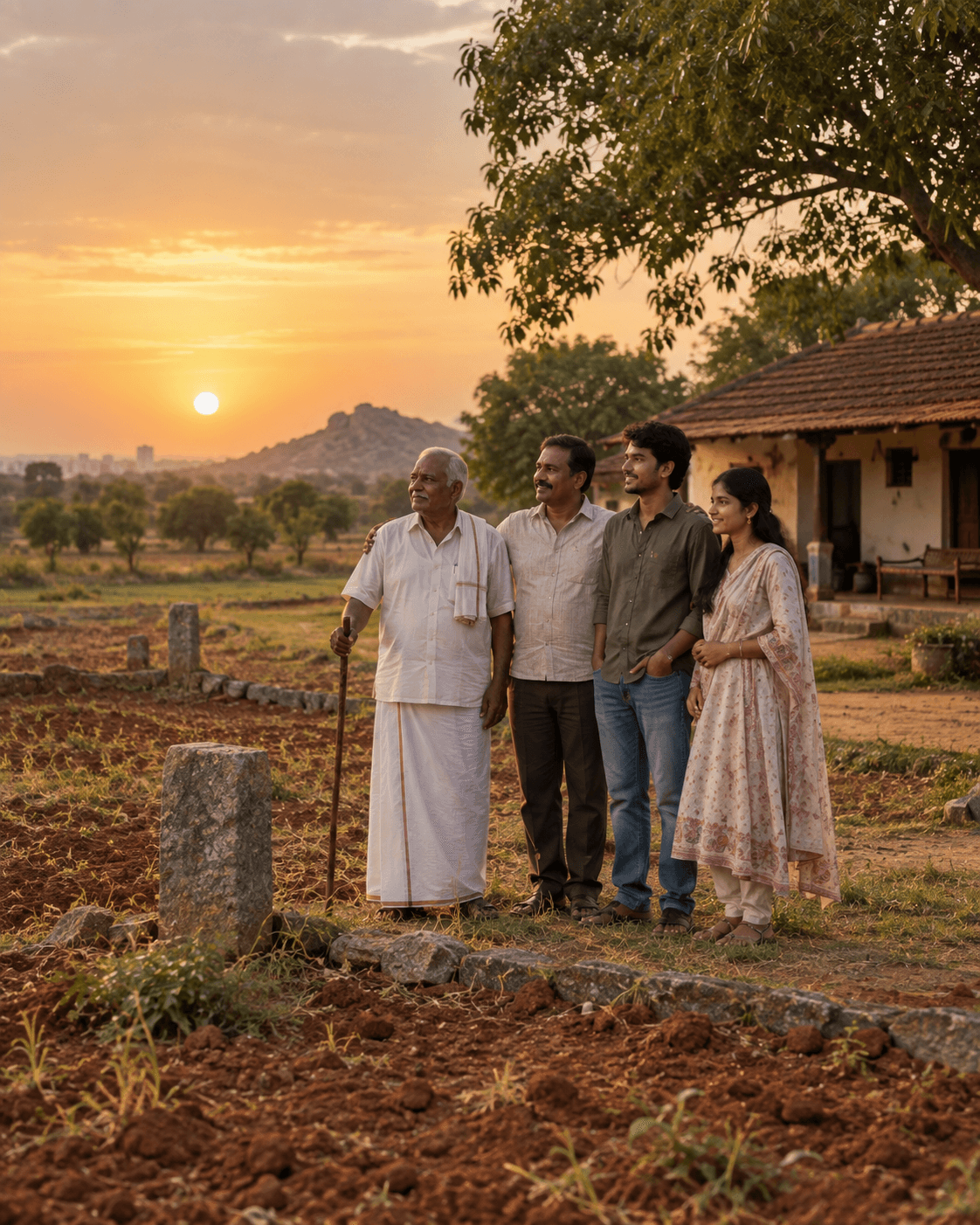
Ancestral property (Paitruka Aasthi) is property that has come down undivided through the male line, from great-grandfather to grandfather to father to you, and has stayed as joint family (coparcenary) property.
The key feature is the "by birth" right. Every coparcener gets a share the moment they are born. Since the 2005 amendment to the Hindu Succession Act, daughters are coparceners too, with the same rights as sons. The Supreme Court confirmed in Vineeta Sharma v. Rakesh Sharma (2020) that this applies even if the father died before 2005.
This is why a father cannot freely sell genuine ancestral property on his own. His children already own a share.
What Makes a Property Self-Acquired
Self-acquired property is anything you own individually:
Land you bought with your own income or loan
Property gifted to you through a gift deed
Property you received through a Will
Your share after a formal partition (with an important exception below)
You can sell, gift or will self-acquired property without anyone's consent.
The Trap Most Families Don't Know About
Many people assume "my father left it to me, so it's ancestral." That is not always true.
The Supreme Court has held in cases like Chander Sen (1986), Yudhishter v. Ashok Kumar (1987) and Uttam v. Saubhag Singh (2016) that when a Hindu male dies after 1956 without a Will, and his property passes to his heirs under Section 8 of the Hindu Succession Act, it generally becomes the heirs' separate property. It does not automatically become ancestral property in the hands of the next generation.
Courts have not always been consistent on this, which is exactly why these cases drag on for years. The nature of a property is decided by how it came to you, not just by who owned it before.
Quick Checklist: Ancestral or Self-Acquired?
Check | Points to Ancestral | Points to Self-Acquired |
|---|---|---|
How it came to you | Held jointly by the family across generations, never divided | Bought, gifted, received by Will |
Father's death | Joint family property still running as a coparcenary | Inherited after 1956 without a Will under Section 8 (generally separate) |
Partition | No partition ever done | Registered partition deed exists (but your share may still be coparcenary for your own children, check with an advocate) |
Revenue records | Old pahanis or link documents show joint family or HUF names | Sale deed and pattadar passbook only in individual name |
Money trail | No purchase record, came "from elders" | Bank statements, loan papers, payment receipts |
Tax records | Filed as HUF income | Shown in individual ITR |
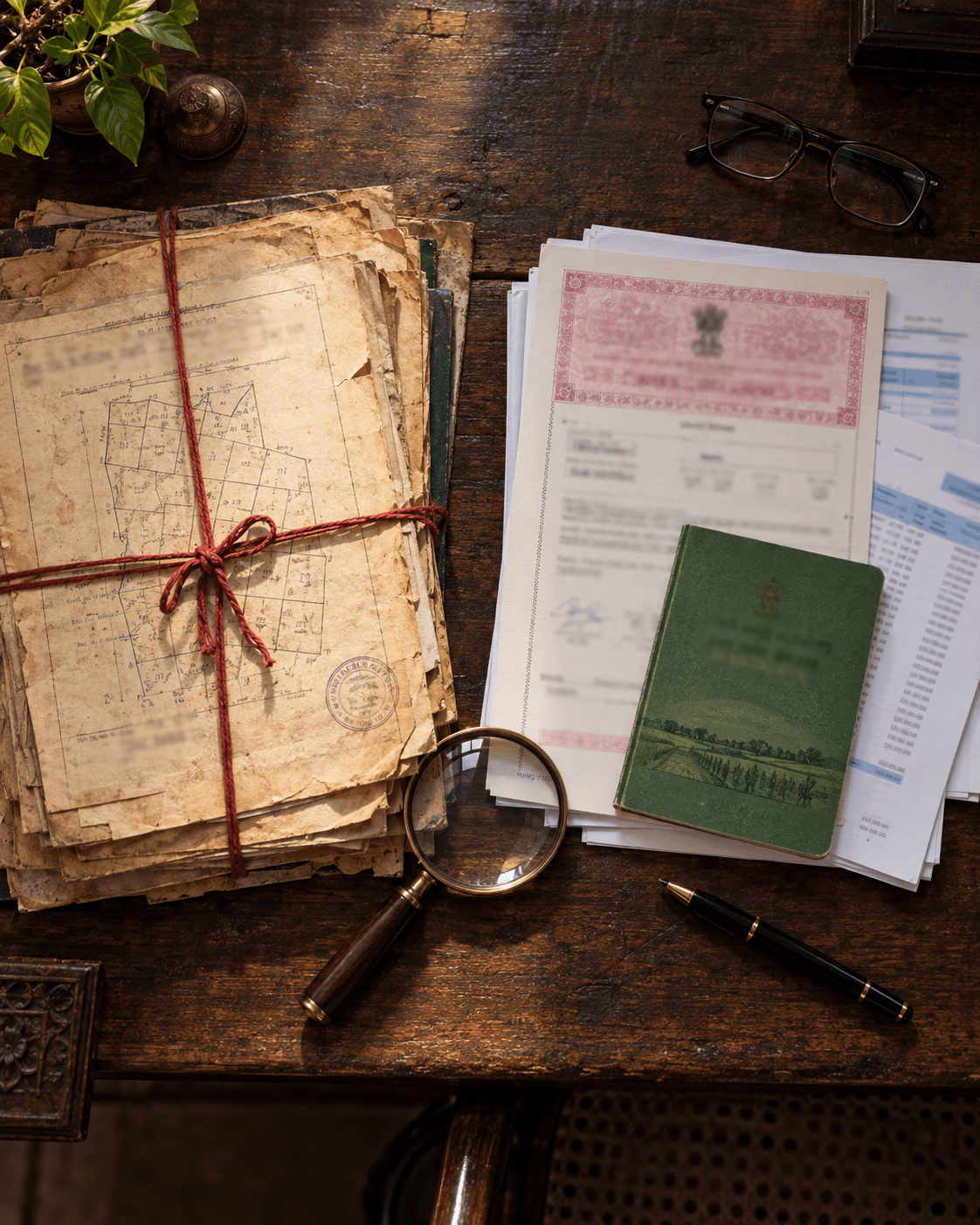
Always pull the full link documents for at least 30 years and cross-check with Bhu Bharati records before deciding.
Legal Heir Rules at a Glance
When a Hindu male dies without a Will, his separate property goes to Class I heirs in equal shares.
Class I Heir | Share |
|---|---|
Widow | Equal share |
Sons | Equal share each |
Daughters (married or unmarried) | Equal share each |
Mother | Equal share |
Children of a predeceased son or daughter | Their parent's share, divided among them |
If there are no Class I heirs, the property goes to Class II heirs such as father, siblings and their children.
In Telangana, the Tahsildar issues a Family Member Certificate (FMC), applied for through MeeSeva or the Mandal Revenue Office with the death certificate and ID proofs of heirs. For any sale of inherited land, every heir named on it is expected to sign.
Who Should Sign the Sale Deed
Property Type | Who Signs |
|---|---|
Genuine ancestral | Seller plus all coparceners, including daughters. Minors need extra legal care (legal necessity or court permission) |
Inherited after father's death | All legal heirs on the Family Member Certificate |
Self-acquired | Only the seller is legally required. Wife and major children as confirming parties is a safety step, not a legal must |
Sample Consent / Confirmation Deed Format
Use this as a starting point only. Get it vetted by an advocate and check stamp duty and registration requirements at your Sub-Registrar office.
CONFIRMATION AND CONSENT DEED
This Deed is executed at ____________ on this ___ day of ______, 20.
BY:
Smt. ____________, W/o ____________, aged ___, residing at ____________ (Aadhaar No. XXXX XXXX ____)
Sri/Kum. ____________, S/o or D/o ____________, aged ___, residing at ____________
(hereinafter called the "Confirming Parties")
IN FAVOUR OF: Sri/Smt. ____________, S/o or W/o ____________, aged ___, residing at ____________ (hereinafter called the "Purchaser")
WHEREAS:
Sri ____________ (the "Vendor") is the absolute owner of the property bearing Sy. No. ______, Plot No. ______, admeasuring ______ sq. yards, situated at ______ Village, ______ Mandal, ______ District, Telangana (the "Schedule Property").
The Vendor acquired the Schedule Property through ____________ (sale deed / gift deed / partition deed) bearing Document No. ______ dated ______ registered at SRO ______.
The Confirming Parties are the wife and major children of the Vendor.
The Vendor has agreed to sell the Schedule Property to the Purchaser for a total consideration of Rs. ____________ under a Sale Deed dated ______.
NOW THIS DEED WITNESSES:
The Confirming Parties confirm that they have full knowledge of the sale and give their free consent to it.
The Confirming Parties declare that they have no right, title, interest or claim in the Schedule Property, whether as ancestral, joint family or inherited property.
The Confirming Parties shall not raise any objection or file any claim against the Purchaser or their successors regarding the Schedule Property at any time in future.
This Deed is executed voluntarily, without coercion, fraud or undue influence.
SCHEDULE OF PROPERTY Boundaries: North ______ | South ______ | East ______ | West ______
Signatures of Confirming Parties:
Witnesses:
Name, address and signature ____________
Name, address and signature ____________

Bottom Line
A clean title isn't only about documents. It's about making sure no family member can walk into court later and say "I never agreed." If you are selling, collect the signatures. If you are buying, insist on them.
This article is for general awareness and is not legal advice. Every property has its own history, so consult a qualified advocate before you buy or sell.
Stay in touch
Stay updated with the latest news and insights from Plot It.