Can Your Farmland Earn From Carbon Credits? A Practical Setup and Registration Guide for 2026
3 min read
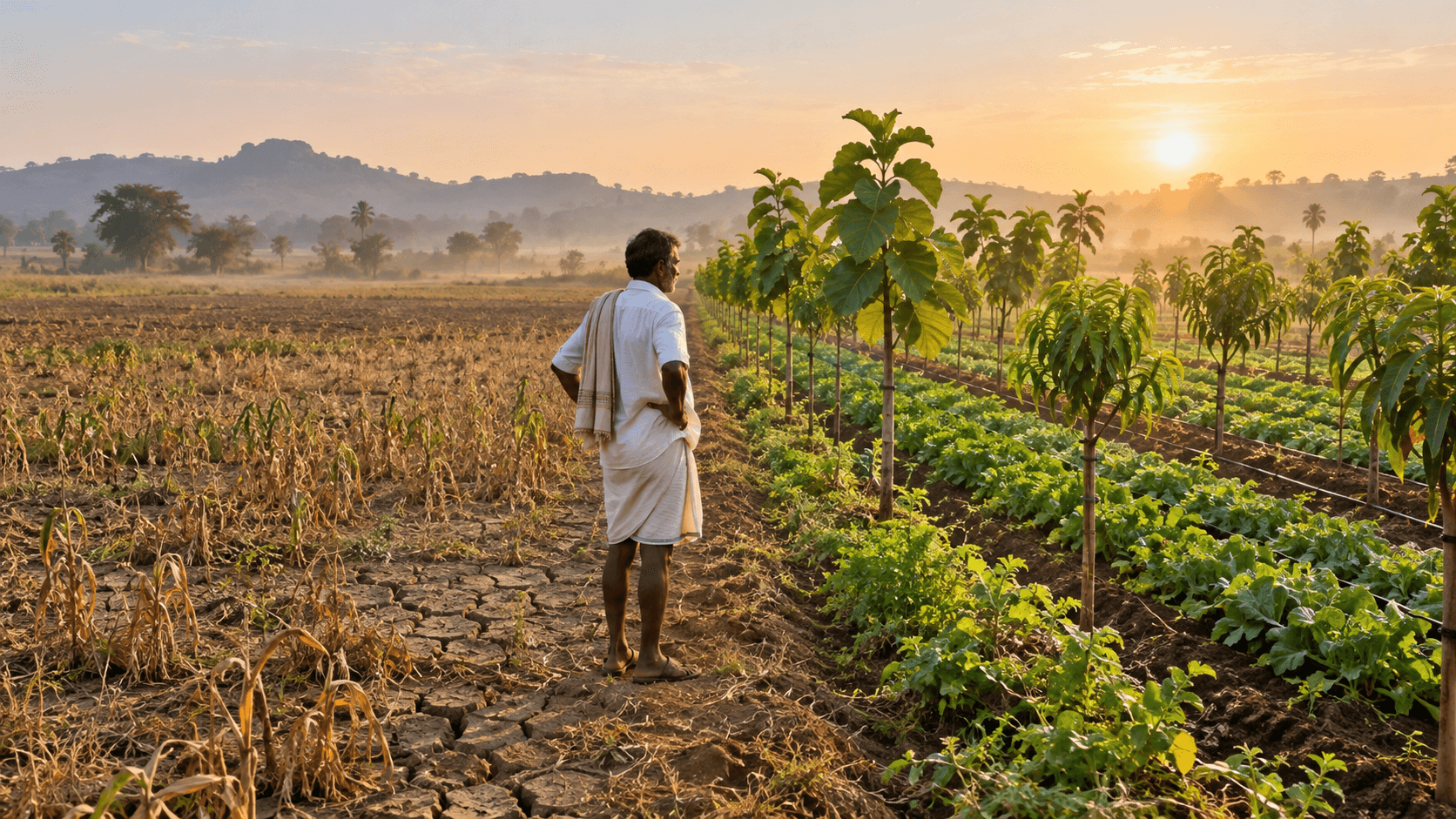
Planting trees on part of the land is one way to add income. Carbon credits can be one part of that income, but it helps to know what’s realistic before you sign anything.
What are carbon credits?
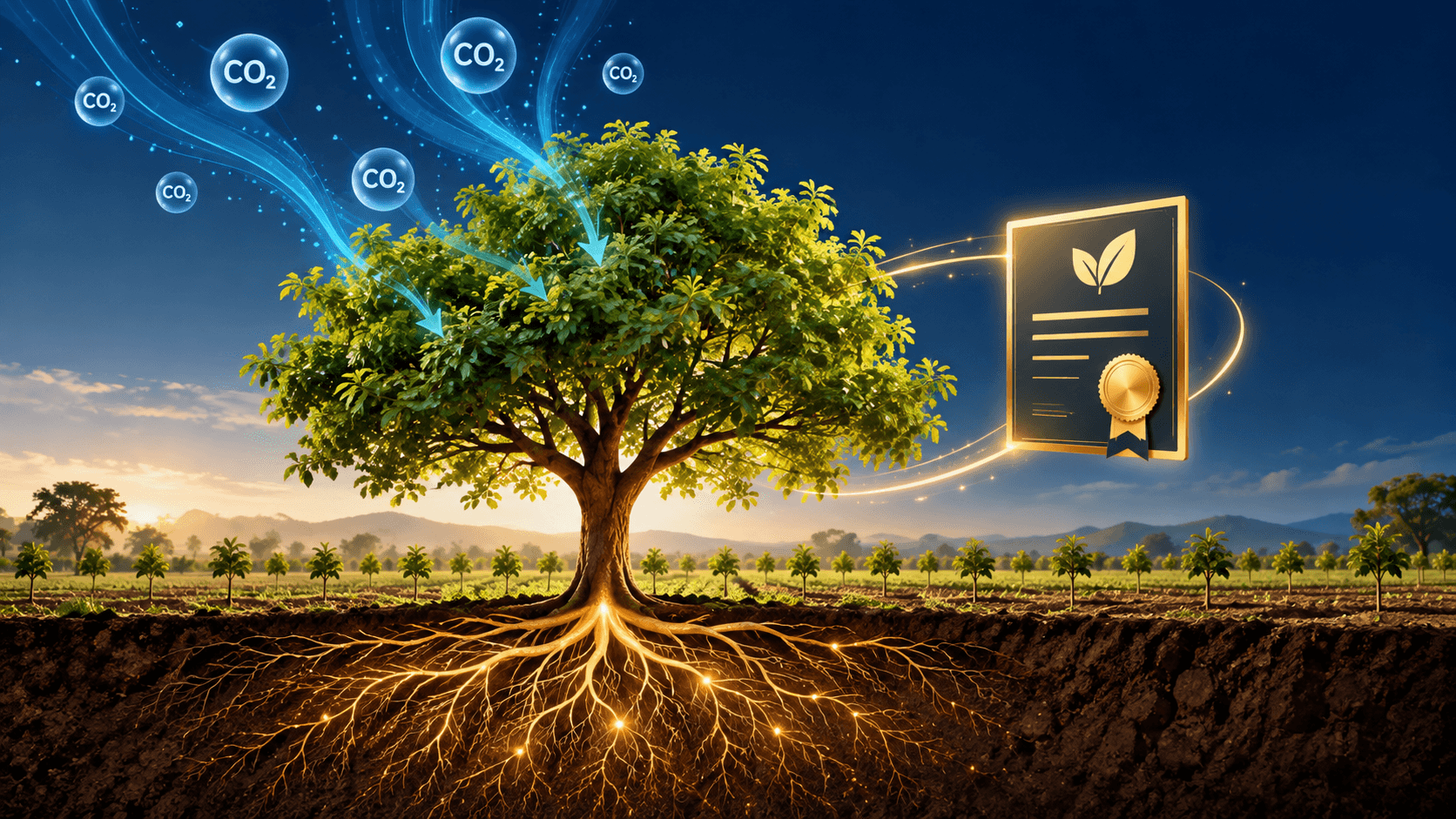
Trees absorb carbon dioxide (CO₂) as they grow. When this absorption is measured and verified under an approved method, it can be turned into carbon credits. One credit equals one tonne of CO₂ removed. Companies that want to offset their emissions buy these credits.
The key word is verified. Trees on your land don’t automatically earn credits. They have to be part of a registered project that is monitored and audited.
India’s carbon market: where things stand
India set up its Carbon Credit Trading Scheme (CCTS) in 2023, with the Bureau of Energy Efficiency (BEE) as administrator and Grid-India running the registry. It has two tracks:
Track | Who it’s for |
|---|---|
Compliance | Large industries with emission targets |
Offset | Voluntary projects, including farmers, FPOs and developers |
The offset portal opened for registrations in June 2025. But trading under the Indian market is still being rolled out, and the first approved methods mostly cover energy and mangrove projects. A clear method for farm tree planting under CCTS is still awaited.
Right now, most Indian farmers earning from tree carbon do it through international voluntary standards like Verra and Gold Standard, via a project developer.
What can you realistically earn?
Factor | Realistic range |
|---|---|
CO₂ absorbed by agroforestry | 3 to 6 tonnes per acre per year |
Price per credit | ₹800 to ₹2,000 per tonne |
Gross carbon income | Roughly ₹2,400 to ₹12,000 per acre per year |
Time to first payment | 1 to 3 years after the project starts |
Developers usually take a share for handling registration, audits and sales, so what reaches the farmer is lower. Young trees absorb less in the first few years.
Existing trees usually don’t count
Carbon projects must show “additionality”, which means the carbon removal would not have happened without the project. Under the Indian offset rules, projects must also start on or after 1 January 2025. Trees already standing on your land for years generally won’t qualify. New plantations or a planned agroforestry setup are what count.
Step-by-step setup process
Plan the plantation. Pick fast-growing, local species that also give timber or fruit, like teak, malabar neem, mango or bamboo. Mix them with crops for agroforestry.
Keep land records clean. Clear title, pattadar passbook, survey number and updated Dharani or Bhu Bharathi records are a must.
Join a project developer or FPO. Small landowners can’t register alone. Developers group many farms into one project and handle the technical work.
Sign the agreement carefully. Check the contract length (often 10 to 30 years), revenue share, who owns the credits, and what happens if you sell the land.
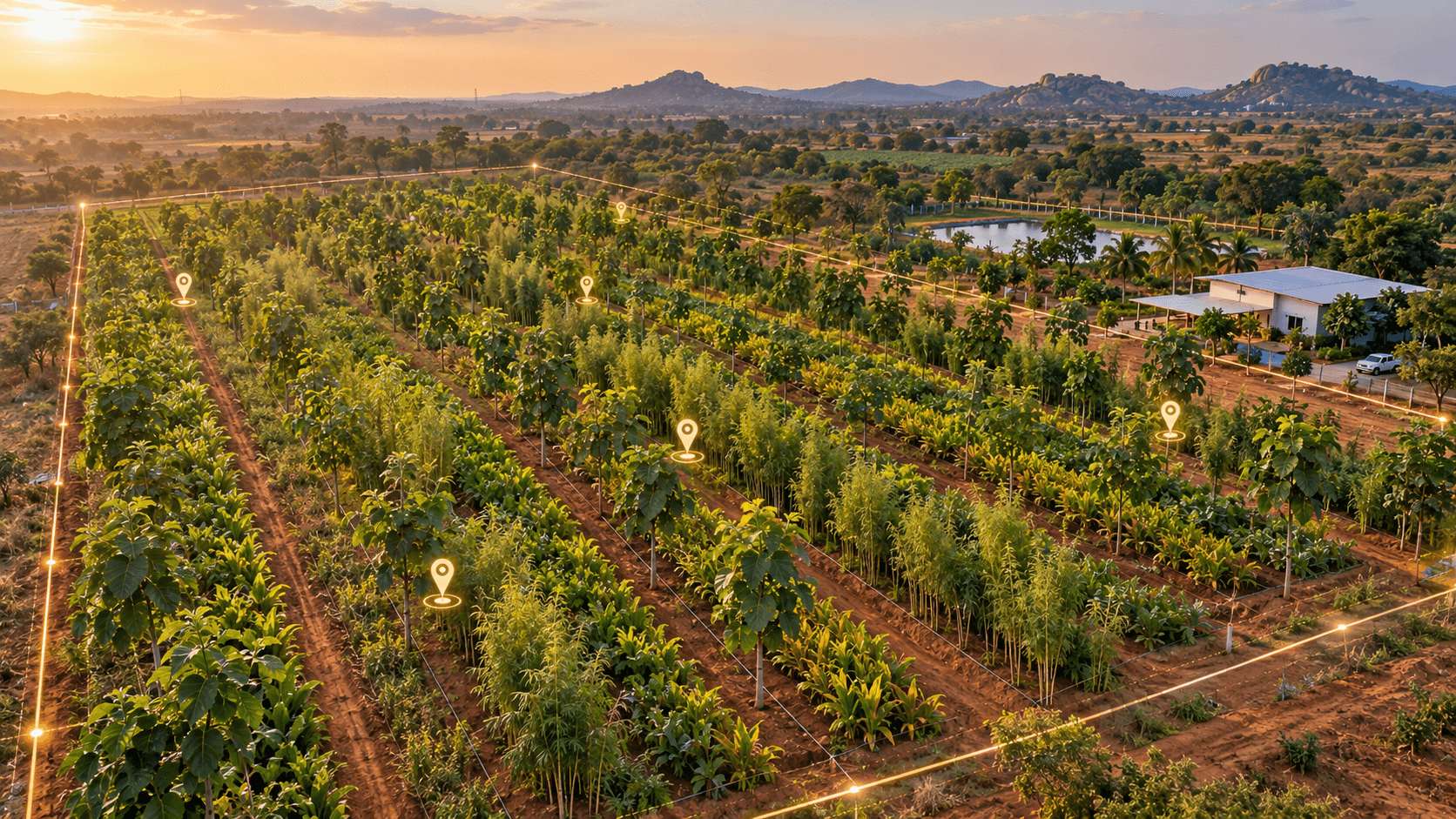
Baseline and geo-tagging. The developer surveys your land and maps every tree using GPS and satellite data.
Validation and registration. An accredited auditor checks the project design, and it gets registered with Verra, Gold Standard or the Indian registry.
Monitoring and verification. Tree growth is measured regularly and checked by a separate auditor.
Credit issuance and payment. Verified credits are issued and sold, and your share is paid as per the agreement.
Before you sign, check:
Is the developer registered with a recognised standard, with completed projects?
Is your revenue share stated clearly in rupees or as a percentage?
Can you exit, and what penalty applies?
Does the agreement restrict cutting trees or selling the land?
Avoid anyone asking for large upfront fees or promising fixed high income.

The bigger picture
Carbon credits work best as a bonus, not the main income. A well-planned plantation gives you land value growth, intercrop income, timber value at maturity, and carbon credits on top.
Stay in touch
Stay updated with the latest news and insights from Plot It.