Power of Attorney in Land Deals
3 min read
You're standing on a plot you want to buy. The owner isn't there — someone else is signing on their behalf, holding a Power of Attorney. Should you walk away, or is this normal? Here's the honest answer: POA deals aren't automatically risky. But they demand verification most buyers skip.

What Exactly Is a POA?
A Power of Attorney is a legal document where a property owner authorizes another person to take decisions — including selling land — on their behalf. It's common when the owner lives abroad, is elderly, or simply can't be present for every registration formality.
There are two types you'll encounter:
GPA (General Power of Attorney) — Broad powers across multiple matters: banking, legal disputes, property transactions, and more.
SPA (Special Power of Attorney) — Limited to one specific task, like only registration or only a bank transaction. Nothing more.
Knowing which one you're dealing with tells you how much authority that "someone else" actually has.

The 3 Non-Negotiable Checks
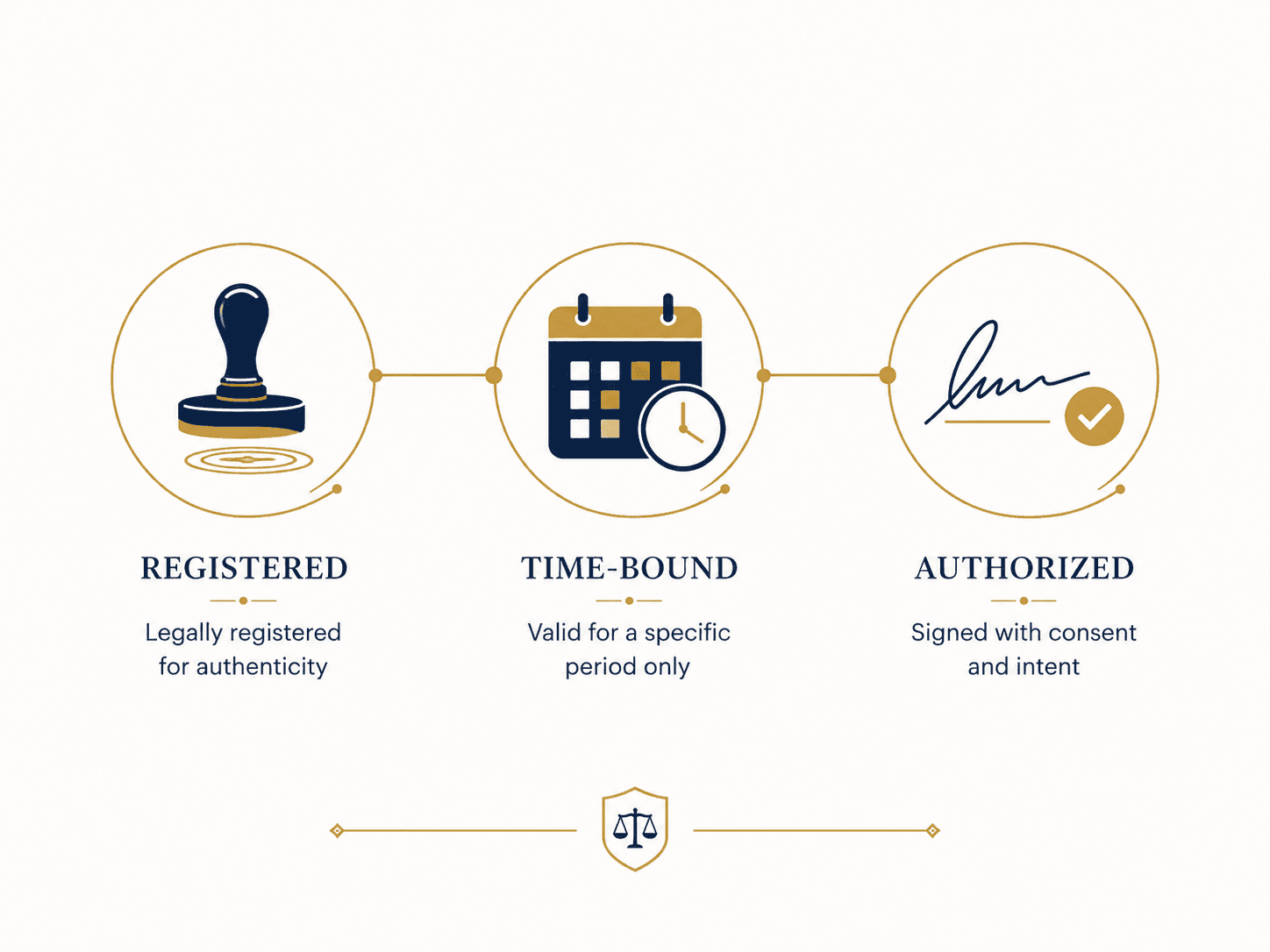
Before you let a POA holder sign anything on your deal, verify these three things:
1. Registration The POA document itself must be registered — not just notarized. An unregistered POA carries far less legal weight and can be challenged later.
2. Validity — Is the Owner Still Alive? A POA dies with the owner (unless it's explicitly stated to survive, which is rare in property matters). Confirm the original owner is alive and the POA hasn't been revoked. A revoked or outdated POA makes the entire transaction void.
3. Authorization — Does It Say "Right to Sell"? This is where most buyers get burned. A POA might exist and be perfectly valid — but if it doesn't specifically mention the right to sell the property, the holder cannot legally transfer it to you. Read the exact wording. Don't assume.
Special Rule for NRI Sellers
If the land you're buying belongs to an NRI and someone in India is signing on their behalf, that POA is valid only if it was signed at the Indian Embassy/Consulate in the country where the owner resides. A POA notarized locally abroad, without embassy attestation, won't hold up in Indian courts.

The Bottom Line
A POA is a convenience, not a red flag. Owners have legitimate reasons for appointing someone to act for them. Your job as a buyer isn't to reject every POA deal — it's to confirm the document is "live": registered, valid, and specifically authorized for sale.
When the owner's signature, the POA holder's signature, and full legal clarity all line up, your investment stays safe — today and years from now when you want to resell.
Stay in touch
Stay updated with the latest news and insights from Plot It.